 Facebook
 Goodreads
 LinkedIn
 Meera Lester
 Twitter


Satsuma Mandarin Oranges
Do you have a space for a small container tree on your patio or garden? How about sunny area in your home where a small tree (perhaps a dwarf cultivar) could thrive? Do you find the idea of growing your own citrus appealing? If you answered yes, consider planting a Satsuma mandarin orange.
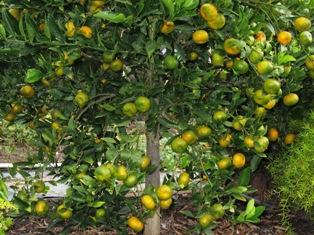
The Satsuma mandarin orange tree produces seedless fruit that is a source of potassium and rich in immune-boosting Vitamin C. Where I live on a farmette in the San Francisco Bay Area, these mandarins ripen in mid-November and hang onto the tree through December and January. The small fruits taste sweet, are easy to peel, have little to no seeds, and offer a citrusy scent and a robust flavor with low acidity. You can choose from literally dozens of cultivars.
The easiest way to enjoy the fruit is to pick it right off the tree, peel, and eat. Or drop segments into your juicer for a freshly squeezed juice for breakfast. You can toss these mandarins into a salad, packed them into a lunch, or create a delicious curd tart. If you’re into canning jams and jellies, you can add them to other types of citrus to make a delicious marmalade.
GROWING SATSUMA MANDARINS
Satsuma mandarin trees will thrive in USDA zones 8-11. In areas where the wintry weather falls below 15 degrees Fahrenheit, these small trees will need some protection. They thrive in a Mediterranean climate.
These mandarins benefit from full sun and a slightly acid, well-drained soil. Water well every 7 to 14 days, especially during dry periods. Water around the base of the trunk. Avoid over-watering as it causes the leaves to turn yellow and drop. Starting in February, feed your tree three times a year with ammonium sulfate or citrus food.
If you are buying from a nursery and the tree is already potted, make sure that the plant is in optimum condition. You’ll want to choose a plant that appears well-watered, with a strong scaffolding of branches from the trunk, and a canopy of healthy leaves. Because the tree is compact and adaptable, it can remain potted or easily be espaliered against a wall or fence.
Check underside of leaves for aphids. Also look for leaf warping and a pattern of white or tan lines across the leaves. The presence of leaf warping and lines are a indicator that the tree is infected with the leaf miner, a citrus pest.
Choosing a good speciman of tree and giving it proper care, your Satsuma mandarin will reward you with bountiful crops year after year.

Persimmon: A Heart-Healthy, Delicious Fall Fruit
If you want to eat a heart-healthy fruit this the fall, don’t automatically assume it has to be an apple.
One medium persimmon is loaded with vitamins, contains about six grams of dietary fiber, and has more potassium, magnesium, manganese, and iron than an apple.

Although apples do contain less sugar, carbs, and calories than persimmon, the latter fruit offers higher concentrations of antioxidants, minerals, and vitamins A, C, and K.
Persimmon antioxidants neutralize and help remove the free radicals that can damage DNA inside cells.Cellular inflammation triggers and sustains chronic disease. When free radicals, a natural byproduct of cell metabolism, builds up, it results in oxidative stress and inflammation.
The polyphenols found in persimmons help scoop the “bad” LDL cholesterol from the bloodstream and protect blood vessels from oxidative stress–good for the heart.
Persimmons contain beta-carotene and lycopene. These are converted by the body into Vitamin A that protects the eyes against macular degeneration. The Vitamin C in persimmons, acting alongside the fruits flavonoids, boosts the body’s immune defenses as well as lowering blood pressure.
So, if you’re headed to the grocery store, farmer’s market, or local orchard to pick up some heart-healthy fruit this fall, consider the health benefits of persimmons. Better still, reach for both types of heart-healthy fruit–persimmons and apples. Your body will thank you.

If you enjoy reading about country living and growing heirloom fruits, vegetables, and berries or keeping bees like we do here on our farmette, you also might enjoy reading my Henny Penny Farmette series of mysteries. Each book includes delicious recipes and tips for growing and harvesting heirloom produce along with strategies for caring for chickens and bees.
The real Henny Penny Farmette is located in an inland valley east of the San Francisco Bay. These cozy mysteries as well my more than two dozen wellness and spirituality books are are available on Barnes and Nobles and Amazon or wherever books are sold. –ML
How to Make Kumquat Marmalade
Eating a fresh kumquat–the small relative to the sweet orange–is like getting a dose of Vitamin C in a single bite. Or, if you don’t like the tart fruit (the edible rind is sweet), then make your kumquats into a marmalade.
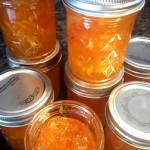
Kumquats make a lovely, sweet marmalade when coupled with juicy oranges, rinds included
My neighbor recently brought over several boxes of freshly-picked kumquats. We ate some fresh but I turned the rest into a sweet, spread that tastes quite like orange marmalade.
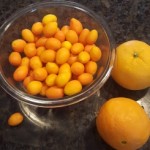
Kumquats and oranges are the perfect combo for marmalade
When fruit is available during the year, you can turn that fruit into a delicious conserve, jelly jam, marmalade, or fruit butter. When citrus is in season, oranges, kumquats, grapefruits, and lemons can be coverted to sweet spreads.
There are distinct differences between conserve, jam, jelly, marmalade, and fruit butter. Conserve is a jam made from fruit with other ingredients added, including raisins, coconut, and nuts. Jelly is made from the juice of the fruit while jam is made from the fruit pulp. Marmalade includes fruit, juice, and rind. A fruit butter utilizes the fruit pulp and sugar to make a thick, smooth spread.
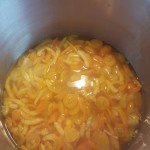
Marmalade includes fruit pulp, rind, water, and sugar
KUMQUAT MARMALADE RECIPE
Ingredients:
2 cups thinly sliced kumquats
1.5 cups chopped orange pulp (2 medium oranges)
1.5 cups sliced orange peel (2 medium oranges)
1/3 cup lemon juice
1.5 quarts water
Sugar (the amount will depend on the amount of fruit/water mixture after 12 hours)
Directions:
Mix together all ingredients, except the sugar, in a deep large pot. Simmer for 5 minutes. Remove from heat and cover. In a cool place, allow the mixture to stand for 12 hours or overnight to soften the rind. Remove any large seeds. Cook rapidly until peel has softened. Measure out fruit and liquid mixture and then add 1 cup of sugar for each cup of the fruit mixture. Stir until the sugar is dissolved.
Rapidly bring the mixture to a boil over high heat. Stir as needed to prevent sticking, especially as the mixture thickens and reaches the gelling point. (Hint: You can check to see if the marmalade is gelling by dropping a spoonful of the hot marmalade onto a chilled or frozen saucer. If the marmalade is sheeting instead of running off the plate, it’s ready to can. Also, you can add Classic Pectin according to directions on container to ensure the marmalade properly thickens). Stir in carefully to avoid splattering on your skin. Remove from heat. If the mixture has foam, skim to remove it. And also remove any large seeds that may have been missed.
Ladle the hot fruit mixture into hot jars (run the jars through a hot rinse cycle as the jam is cooking). Leave 1/4-inch headspace. Tighten the ring around the flat, rubber-seal cap. Place the jars into a boiling-water canner. Bring to a boil and process 10 minutes. Remove jars from canner and let stand until cool. The caps will make a popping sound as they cool and seal.
__________________________________________________________________

- All of Meera Lester’s Henny Penny Farmette mysteries are available online and in bookstores everywhere. Also, check out Meera Lester’s self-help books on health, wellness, and spirituality on Amazon.com See: https://www.amazon.com/Meera-Lester/e/B001JP835E
Grow Seasonal Greens Now
The cool season of spring is the optimum time to grow seasonal greens for salads and healthy blended shakes. In my kitchen garden, I’ve planted a variety of lettuces, spinach, kale, and chard. Most salad greens are easy to grow also in containers, raised beds, and window boxes when gardening space is limited.
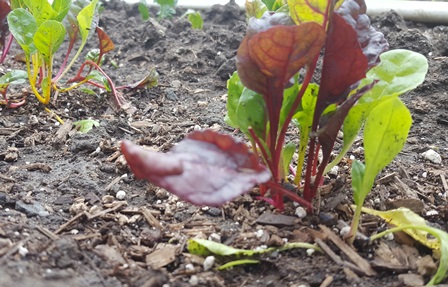
The newly planted Swiss chard shown here is a valuable source of Vitamins A, C, and K
Add compost and aged chicken manure to enrich the soil with nitrogen. Plant heirloom seeds about 1/2 inch in the soil, cover, and water. Within a week or 10 days, you should see the seedlings pop up. The greens will be ready to pick in about 25 days.
Water the plants to keep them hydrated but don’t drown the plants. When you are ready to make a salad, snip the leaves you want with kitchen scissors. New leaves will soon form if the roots are not disturbed and the plant continues to get nutrients and water.
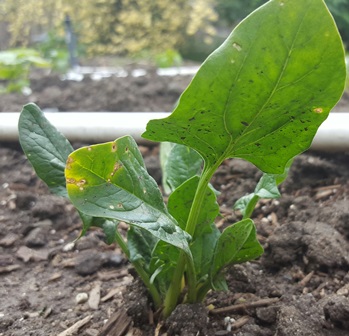
Spinach can be started in seed cell flats and then transplanted into your garden when all danger of frost has passed
SALAD OF FRESH GREENS
1. Snip a variety of greens in the early morning. Wash and thoroughly dry the leaves.
2. Place them in a bowl and crumble on some sharp cheese such as your favorite goat cheese or a Gargonzola (blue-veined, sharp tasting, and crumbly).
3. Add 1/2 cup sugared or candied walnuts.
4. Add some slice red onion and a handful of dried cranberries or chopped dried apricots.
5. Drop into the bowl some slices of a pear such as Bosc (considered the prince of pears).
6. Gently toss the salad and then spritz with red wine vinaigrette prior to plating on pretty salad serving dishes.
* * *
If you love reading about gardening and other farming topics, check out my Henny Penny Farmette series of cozy mysteries that include A BEELINE TO MURDER, THE MURDER OF A QUEEN BEE, and A HIVE OF HOMICIDES.

The newest mystery in the Henny Penny Farmette series
-
Delicious recipes
-
Farm quips and quotes
-
Tips for gardening and keeping chickens and bees
-
An exciting whodunnit mystery